As an Amazon Associate, I earn from qualifying purchases. This comes at no extra cost to you and helps keep this site running.
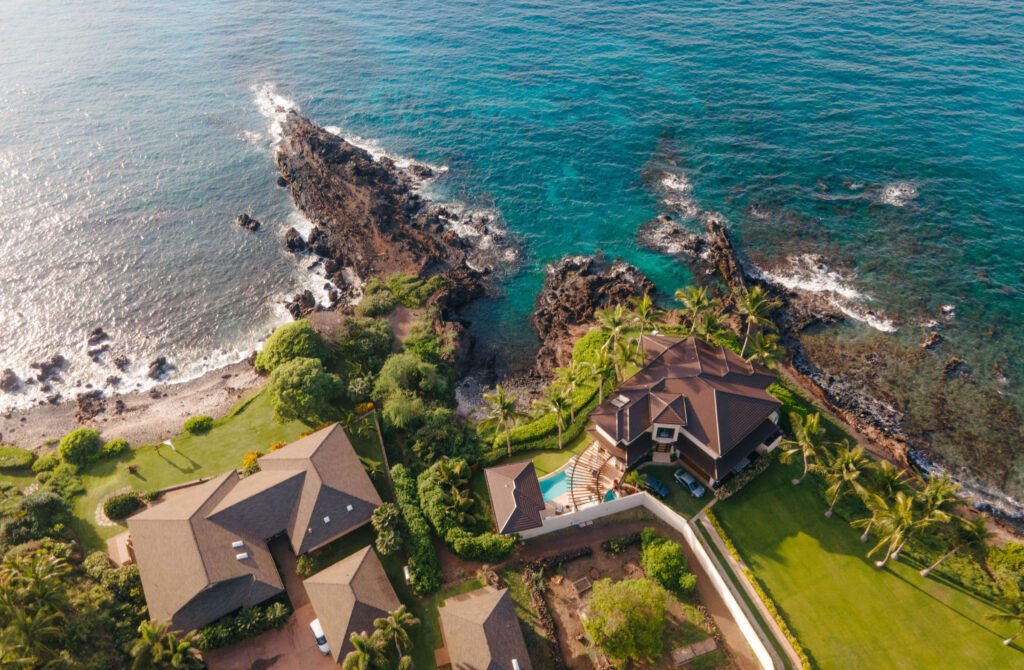
Aerial photography has changed what buyers expect from a real estate listing. A ground-level photo shows the front of a house. A drone shot shows the property in context — the yard, the neighborhood, how close it is to the park down the street. For a buyer who’s relocating from another city, that context matters. For a listing agent, it’s the difference between a listing that looks like every other one and one that stops the scroll.
The good news is that drones capable of professional real estate photography have come down a lot in price. You don’t need a $3,000 rig to shoot shots that look like they were taken by a professional. You do need the right tool for the job, though — not every camera drone handles the specific challenges of real estate well. Bright sky over a dark roof. Tight spaces between houses. Clients who need the shots in an hour. This list is built around those real constraints.
I’ve also put a note on Part 107 at the bottom of this post, because if you’re shooting real estate you’re getting paid, and that changes your legal situation. It’s a short read and it matters.
Quick Picks
| Drone | Best For | Sensor | Price | |
|---|---|---|---|---|
| DJI Mini 4 Pro | Best Budget Pick | 1/1.3-inch, 48MP | Check Amazon | |
| DJI Air 3S | Best Overall | 1-inch, 50MP + telephoto | ~$1,099 | |
| DJI Mavic 3 Classic | Best Image Quality | 4/3-inch Hasselblad, 20MP | Check Amazon |
What to Look for in a Real Estate Drone
Not all camera drones are equally suited for real estate work. Here’s what actually matters for this use case:
Sensor Size & Dynamic Range
The hardest lighting situation in real estate is a bright sky over a property that’s in shadow. A small sensor blows out the sky or underexposes the building — or both. Larger sensors handle this better. For real estate, 1-inch or larger is where image quality gets noticeably more reliable. The 1/1.3-inch sensor in the Mini 4 Pro is the minimum I’d comfortably recommend.
Mechanical Gimbal (Not Just EIS)
Electronic Image Stabilization is software-based — it crops the image and tries to smooth out movement. A mechanical gimbal physically moves to counteract the drone’s motion. For still photography it matters less, but for video walkthrough shots, EIS footage can look smeared or wobbly in wind. A mechanical 3-axis gimbal gives you consistently smooth results.
Flight Time
A real estate shoot involves multiple angles, multiple passes, and redoing shots that didn’t come out right. Short flight times mean you’re constantly landing and swapping batteries under client time pressure. Aim for 30+ minutes real-world. The Air 3S (~38 minutes real-world) and Mavic 3 Classic (~38–42 minutes) give you real breathing room.
Obstacle Sensing
Flying around properties means trees, power lines, fences, and rooftop HVAC equipment. Obstacle sensing gives you a margin of safety when you’re focused on framing a shot rather than watching for hazards. Omnidirectional sensing (all directions) is better than forward-only sensing for this work. The Mini 4 Pro, Air 3S, and Mavic 3 Classic all have omnidirectional systems.
The Best Drones for Real Estate Photography
1. DJI Mini 4 Pro
Check Amazon for current pricing — typically $599–699 in mid-2026
The Mini 4 Pro is the best starting point for agents and photographers who want to add aerial photography to their work without a major investment. At under 250g, it doesn’t require FAA registration for recreational use — though if you’re getting paid, you’ll need a Part 107 license regardless of drone weight (more on that below).
The 1/1.3-inch sensor handles the classic real estate challenge — bright sky, shaded property — better than smaller-sensor budget drones. D-Log M gives you 12.8 stops of dynamic range to work with in editing. In practice, this means you can recover highlights and shadows in post rather than having to nail the exposure perfectly in-camera. For someone getting started with drone photography, that flexibility is worth a lot.
The omnidirectional obstacle sensing makes flying around properties noticeably less stressful. Trees, eaves, fence posts — the APAS 5.0 system routes around them in real time. For exterior shots of a home, the practical effect is that you can focus on framing without as much constant monitoring for hazards. It won’t save you from thin power lines, but for typical residential property work, it performs well.
The limitations worth knowing: real-world flight time is closer to 25–28 minutes, and the standard RC-N2 controller requires your phone as the display. If you’re doing this professionally, pick up two batteries and consider the RC 2 smart controller version for a better outdoor screen. The image quality also falls behind the Air 3S in challenging lighting — if you frequently shoot at dusk, or properties where the contrast between bright sky and dark building is extreme, the 1-inch sensor in the Air 3S handles those situations more reliably.
Pros
- Under 250g — easy to travel with
- D-Log M gives real latitude in editing
- Omnidirectional obstacle sensing
- Best value at its price range in 2026
- 4K/60fps for smooth video
Cons
- Smaller sensor than Air 3S or Mavic 3 Classic
- ~25–28 min real-world flight time
- RC-N2 controller needs your phone
- No telephoto option
2. DJI Air 3S
~$1,099 (base) / ~$1,399 (Fly More Combo) — check Amazon for current pricing
The DJI Air 3S is my top overall recommendation for real estate drone photography. The reason is the 1-inch main sensor — it’s meaningfully larger than the 1/1.3-inch in the Mini 4 Pro, and that size difference shows up exactly where real estate photographers run into trouble: high-contrast scenes where you’re trying to expose for both a bright sky and a shadowed building.
The 1-inch sensor has an f/1.8 aperture and captures around 15+ stops of dynamic range in D-Log M. In practice, that means you can shoot in situations where a smaller sensor would make you choose between a blown-out sky or a dark, underexposed building — and with the Air 3S, you can often recover both. For clients who want to see the property looking its best regardless of the weather on shoot day, this flexibility is worth the price difference over the Mini 4 Pro.
The second camera — a 70mm telephoto on a 1/1.3-inch sensor — is a feature that real estate photographers specifically will appreciate. It gives you a compressed perspective that makes properties look more imposing and well-proportioned, and it lets you capture architectural detail shots (roof lines, exterior finishes, window arrangements) without having to fly in close. The transition between the 24mm wide and 70mm tele is fast and smooth in the DJI Fly app. For a property shoot, I typically do my establishing wide shots with the 24mm and come back for detail shots with the 70mm.
Flight time is the other major advantage. At 45 minutes rated — which works out to around 38 minutes in real-world flying — you have significantly more room than the Mini 4 Pro’s 25–28 minutes. For a full exterior shoot of a large property, you can cover everything in one battery with time to redo shots. That’s a real comfort, especially when you’re working against golden hour light with a client watching.
The Air 3S weighs about 723g, which means it needs FAA registration regardless of use, and you’ll need a Part 107 license for commercial work. It’s also noticeably less pocket-portable than the Mini 4 Pro — you’ll want a proper bag. But for professional real estate work, these aren’t real limitations. The image quality and the dual-camera system are worth it.
Pros
- 1-inch sensor handles tough real estate lighting
- 70mm telephoto for architectural detail shots
- ~38 min real-world flight time
- 10-bit D-Log M on both cameras
- Omnidirectional obstacle sensing
Cons
- $1,099 base price — bigger investment than Mini 4 Pro
- 724g — needs FAA registration
- Larger than Mini 4 Pro, less convenient to carry
- Still a 1-inch sensor — Mavic 3 Classic has better image quality
3. DJI Mavic 3 Classic
Check Amazon — prices have come down since the Mavic 4 Pro launch
The Mavic 3 Classic has a 4/3-inch CMOS Hasselblad camera — the same category of sensor you find in mirrorless cameras, and significantly larger than the 1-inch sensors in everything below it on this list. The difference isn’t subtle. When the sky is brilliant white and the property under it is in deep shadow, the Mavic 3 Classic handles the exposure in a way that smaller sensors simply can’t match. Dynamic range is exceptional — 12.8 stops in D-Log is the same number DJI uses for the Mini 4 Pro, but the physical size of the sensor captures more actual light, which means better results especially in challenging natural light.
The 5.1K video resolution might sound like overkill for real estate work, but it has a practical use: you can shoot 5.1K and crop in to 4K in post, which effectively gives you digital zoom without any quality loss. For a property shoot where you want a wide establishing shot and a tighter crop of the same frame, this saves you an extra flight pass. The 4K/120fps slow-motion option is also genuinely useful for video tours — slow-motion approaches to a property look cinematic and polished.
Flight time of 46 minutes rated (around 38–42 minutes in real conditions) means you’re covered for even large properties or complex exterior shoots. The O3 transmission system with a 15km range is more than adequate — signal is reliable at any reasonable shooting distance.
The important context: the Mavic 4 Pro launched in early 2026 at $2,199, and that’s pushed the Mavic 3 Classic’s price down from where it was at launch. If you’re comparing it against the Air 3S, the question is whether the larger Hasselblad sensor is worth the price difference to you. For professional real estate photographers whose income depends on delivering excellent images in any lighting condition, the answer is usually yes. For someone shooting real estate on the side, the Air 3S handles most situations well enough.
The Mavic 3 Classic is heavier and larger than both alternatives on this list. It’s not a pocketable drone — you need a proper bag. FAA registration is required. And for commercial work, Part 107 applies. None of these are obstacles for a working real estate photographer, but they’re worth knowing before you buy.
Pros
- 4/3-inch Hasselblad sensor — the best image quality at this price
- 5.1K video with 4K/120fps slow-mo
- ~38–42 min real-world flight time
- 12.8 stops dynamic range with D-Log
- Price reduced now that Mavic 4 Pro is out
Cons
- Larger and heavier than the Air 3S
- No telephoto camera (single-lens system)
- O3 transmission vs O4 in newer models
- Higher price than the Air 3S
Budget vs. Pro: Which Level Do You Actually Need?
The honest answer to “which drone should I get for real estate?” depends on the work you’re doing and how much you care about image quality in difficult conditions.
If you’re just starting out — offering drone photos as an add-on service, testing whether it’s worth the investment — the Mini 4 Pro is where to start. The image quality is excellent for most real estate conditions, and the lower price means less financial risk while you’re building the service into your workflow.
If this is a core part of how you earn money, the Air 3S is the right call. The 1-inch sensor, dual cameras, and long flight time make your work more consistent and give you more creative options at each property. Clients at the level where drone photography is a standard part of the listing package will notice the difference.
If image quality is the primary concern and you want the best tool available without going into Mavic 4 Pro territory, the Mavic 3 Classic with its Hasselblad sensor is the answer. The larger sensor handles the hard lighting situations — bright sun, deep shadows, mixed exposure scenes — better than anything else on this list.
Important: If you’re getting paid, you need a Part 107 license. Using a drone commercially — which includes real estate photography you’re compensated for — requires an FAA Part 107 Remote Pilot Certificate, regardless of the drone’s weight. This applies even if you’re an agent shooting your own listings. The exam costs $175, can be studied for in 20–40 hours, and the license is valid for 24 months before a free online recurrent test. It’s not as difficult as it sounds, and it’s required. Check the FAA’s official Part 107 page at faa.gov for current requirements and testing locations.
Frequently Asked Questions
What’s the best drone for real estate photography for under $1,000?
The DJI Mini 4 Pro is the best option under $1,000 for real estate work. The 1/1.3-inch sensor, mechanical gimbal, D-Log M color mode, and omnidirectional obstacle sensing give you the tools you need for professional results. At current pricing in mid-2026 (typically $599–699 now that the Mini 5 Pro has launched), it’s excellent value for this use case.
Do I need a license to fly a drone for real estate?
Yes. Any commercial drone operation in the US — including real estate photography you get paid for — requires an FAA Part 107 Remote Pilot Certificate. This applies regardless of drone weight. The certification exam is $175 to take, and after passing you can legally fly commercially. Operating commercially without a license carries significant fines. Get the license before you take on paid clients.
Is a 1-inch sensor really better than 1/1.3-inch for real estate?
For most conditions, the difference is real but not dramatic. Both sensors handle daytime exterior shots well. Where the 1-inch sensor (Air 3S) pulls ahead is in high-contrast scenes — bright sky against a dark property — and in lower-light conditions like dawn, dusk, or heavily overcast days. If most of your shoots happen in good light, the Mini 4 Pro’s 1/1.3-inch sensor is more than capable. If you frequently shoot in challenging light or your clients notice the quality difference, the Air 3S is worth the upgrade.
How many batteries do I need for a real estate shoot?
Two batteries is the practical minimum for a standard residential property. Real-world flight time on the Mini 4 Pro is 25–28 minutes; on the Air 3S, around 38 minutes. A full exterior shoot of a large home — multiple angles, multiple passes, some hovering to adjust framing — typically runs 25–40 minutes depending on the property. Two batteries gives you buffer for redoes and travel time back to your car. For large commercial properties, three batteries or Plus batteries are worth having.
Can I fly a drone in restricted airspace near airports for real estate listings?
Not without authorization. Many residential areas near airports fall in controlled airspace where drone operations require FAA authorization. The free FAA DroneZone app (B4UFLY) shows your airspace status before you fly. In controlled airspace, you can often get authorization via the FAA’s LAANC system (Low Altitude Authorization and Notification Capability) quickly through apps like Aloft or Kittyhawk. Check before every shoot — airspace rules apply even to experienced pilots.
Related Posts
Last updated: June 2026. Prices verified June 2026. Always verify current pricing and FAA regulations before purchasing or flying commercially.